A DAY OF PROBLEM-
SOLVING & PROGRESS
The second day kicked off with a coffee and standup meeting under palm trees in the entry court. All the teams went back to their tables, some teams diving straight into prototyping. Our “software – team” continued refining their setups from yesterday and installing the software on their system. However, the day quickly turned into a true test of problem-solving skills, pushing our team to think creatively and adapt on the fly.
Hardware & Network Challenges
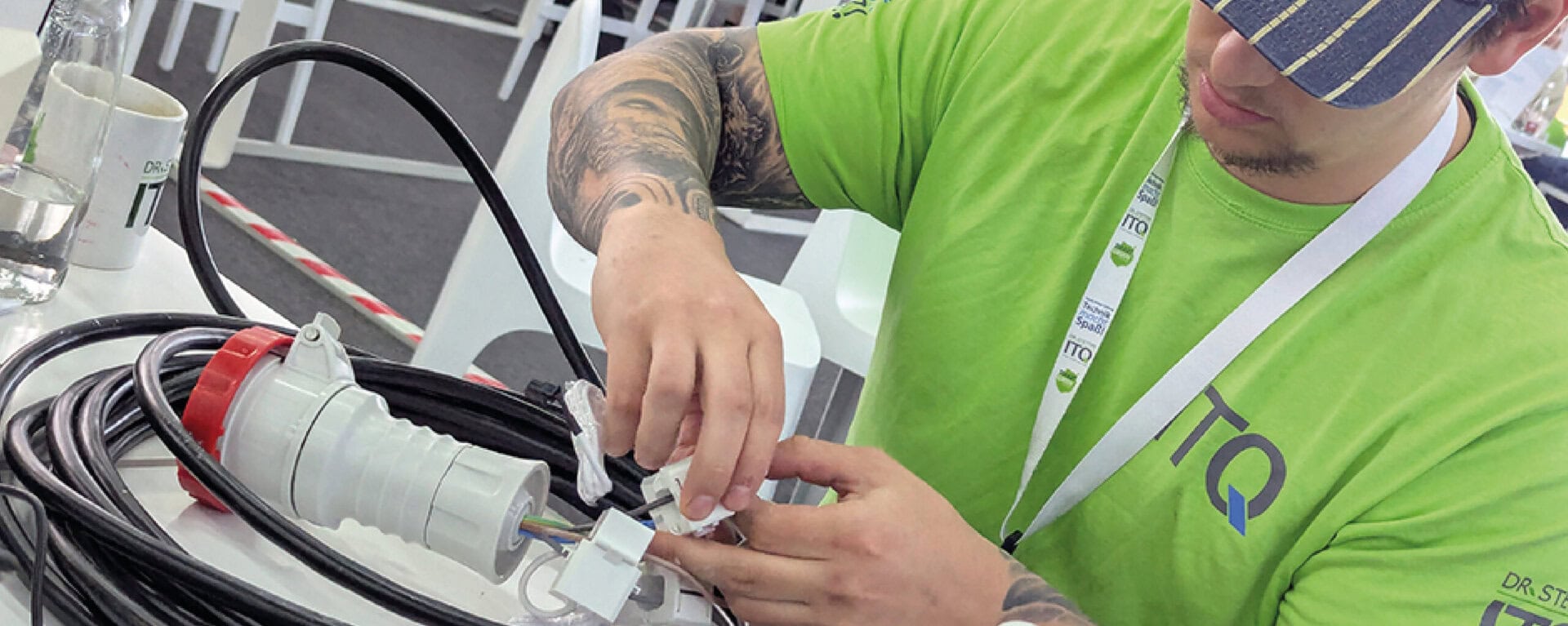
The students started by creating a YAML file to install InfluxDB, Grafana, and Telegraf on their laptops. The plan was to then install it on a Raspberry Pi, but a hardware problem prevented the initial setup. On top of that, slow Wi-Fi forced us to switch to a LAN cable, improving stability.
Switching Raspberry Pi Models:
We had to switch between Raspberry Pi models due to missing cables and incompatible processor architectures. The Raspberry Pi 2 lacked computing power, while the Raspberry Pi 3 had SSH issues. We gave it another try with Raspberry Pi 4 after finding the missing connector in the in-house Web shop — an internal store organized by the ITQ team. It was a fun twist — orders were placed online and picked up at the other end of the room, turning logistics into part of the challenge!


SOFTWARE & STORAGE
STRUGGLES
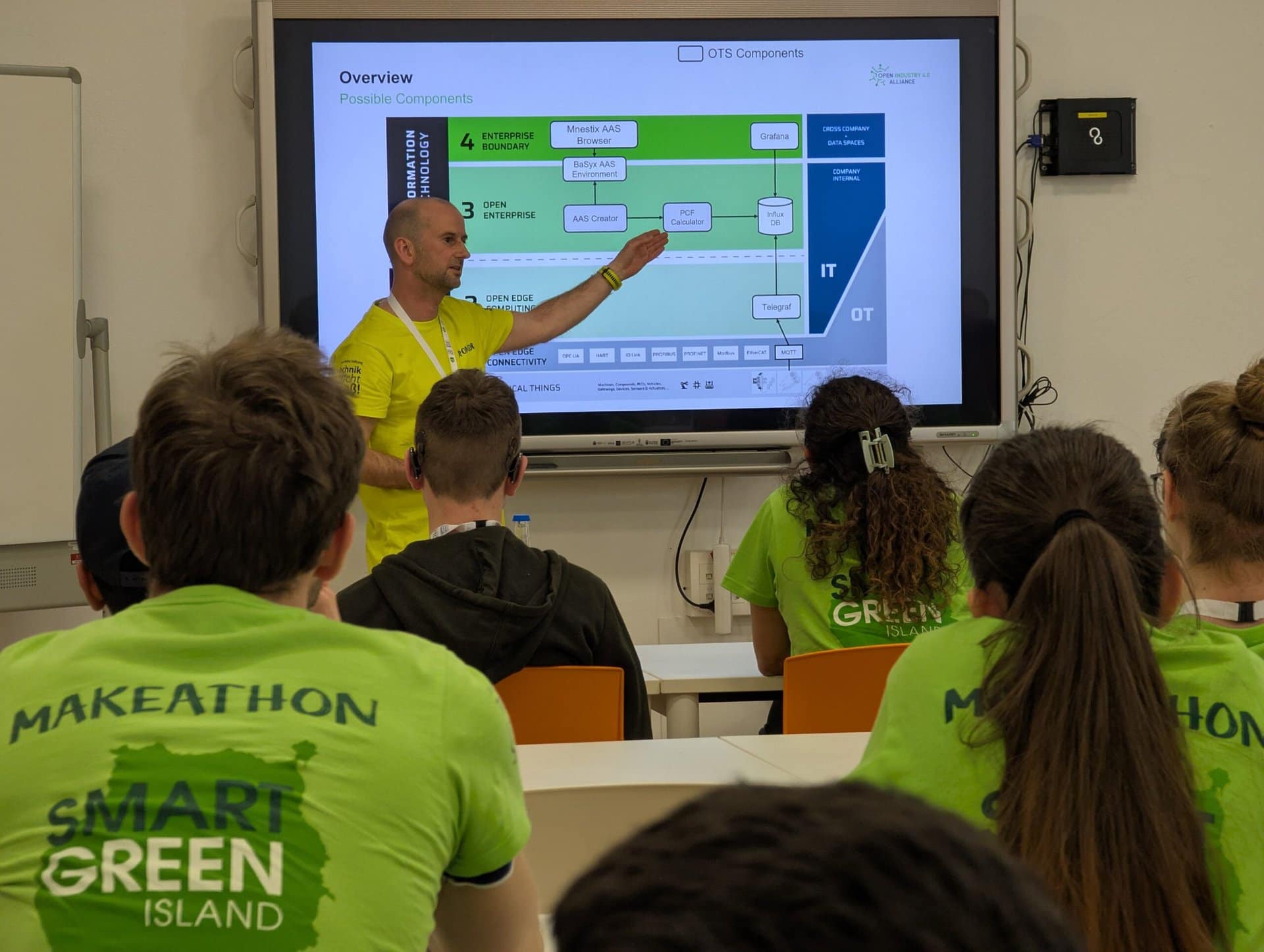
Workshop: Measuring the Product Carbon Footprint with Digital Twins
MAKEATHON
CHALLENGE
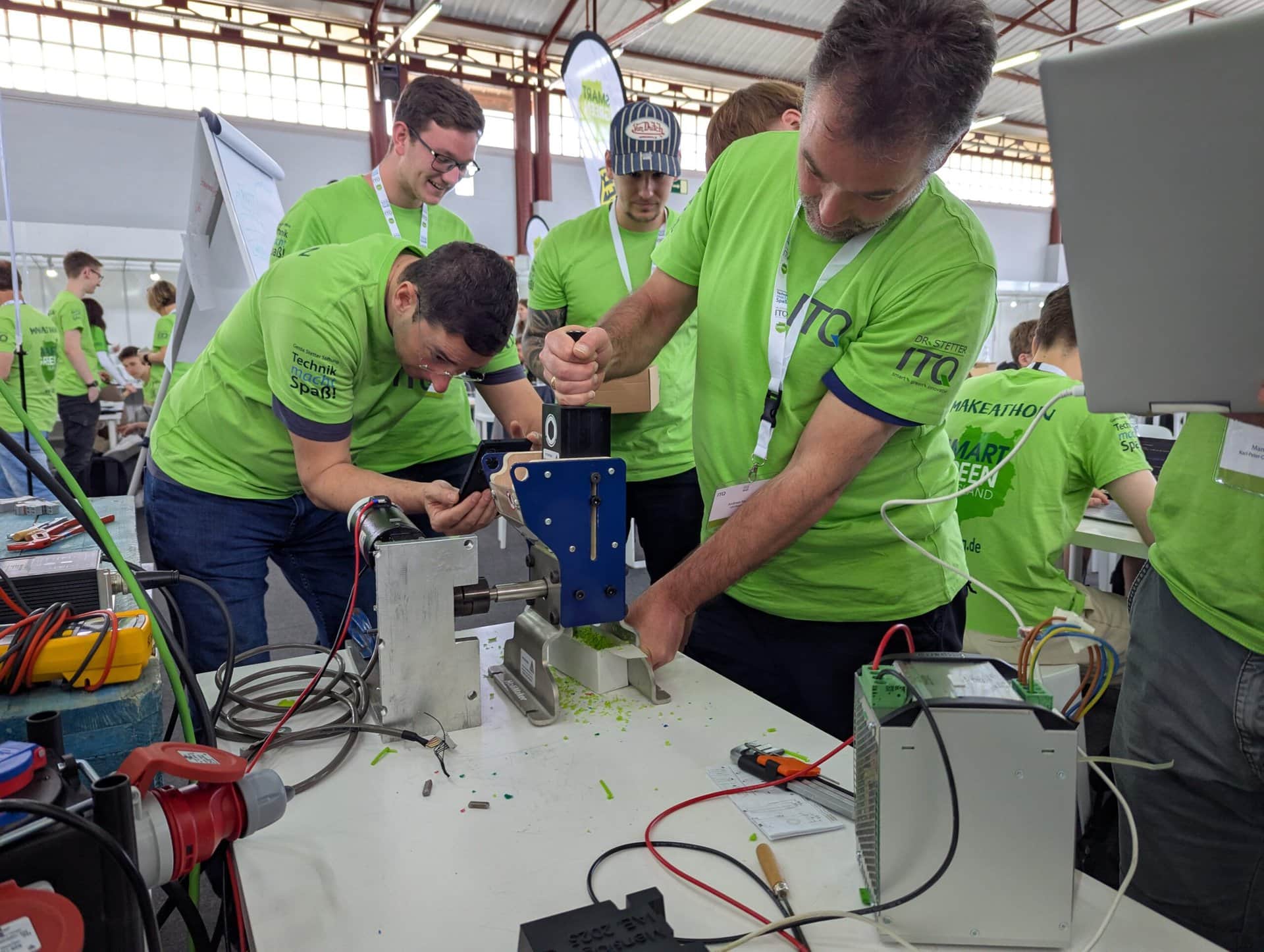
Progress in the Murr Elektronik Challenge
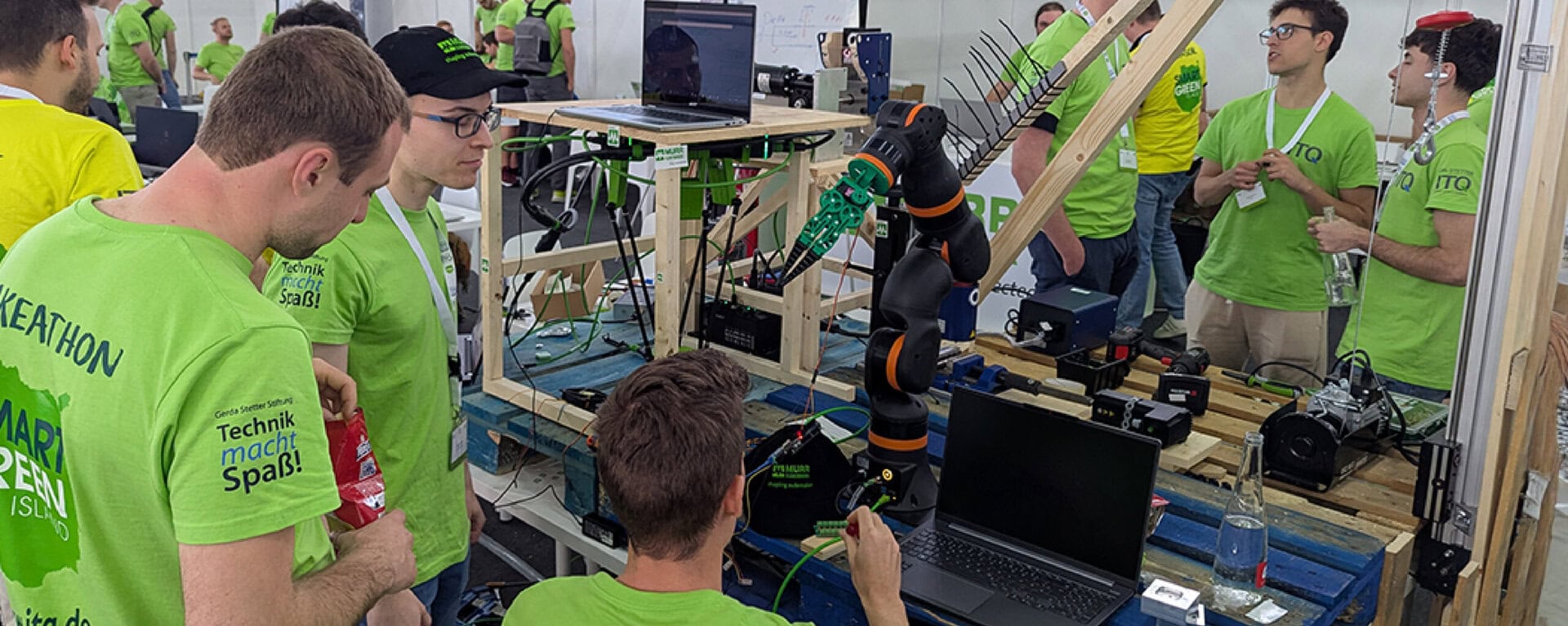
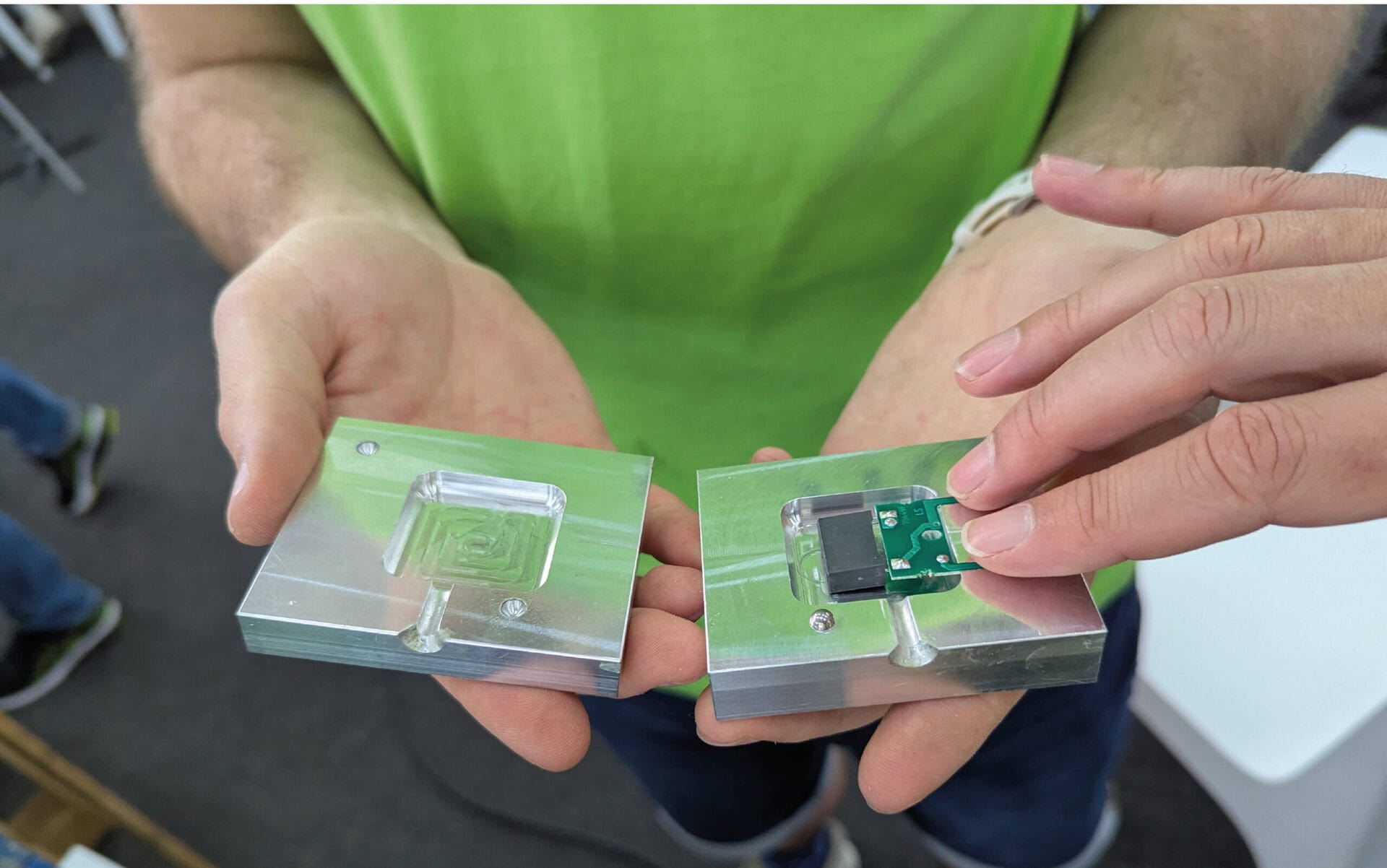
Meanwhile, the other teams working within the Murr Elektronik Challenge made great progress: The Plastic Processing and Injection Molding team started assembling their prototype and setting up their machines on the main table. The Robotics team engineered a way to automatically lower the lever of the injection molding machine and power the shredder, improving efficiency. Their advancements are especially exciting for our Digital Twin team, as this is where we will measure energy consumption next!
A LEARNING
EXPERIENCE
Beyond the Classroom