


The Challenge
We Tackled
Today’s industrial automation environments are tightly bound to hardware and specific vendor ecosystems. This leads to long lifecycle lock-ins, poor scalability, and high maintenance costs. Software-defined approaches aim to break this dependency by decoupling automation workloads from dedicated hardware, enabling flexible deployment, scalability, and modern lifecycle management similar to IT.
Participating
Members




Why this project
matters and for who
This project proves that industrial automation can break free from hardware lock-in by running on a flexible, software-defined IT/OT stack.
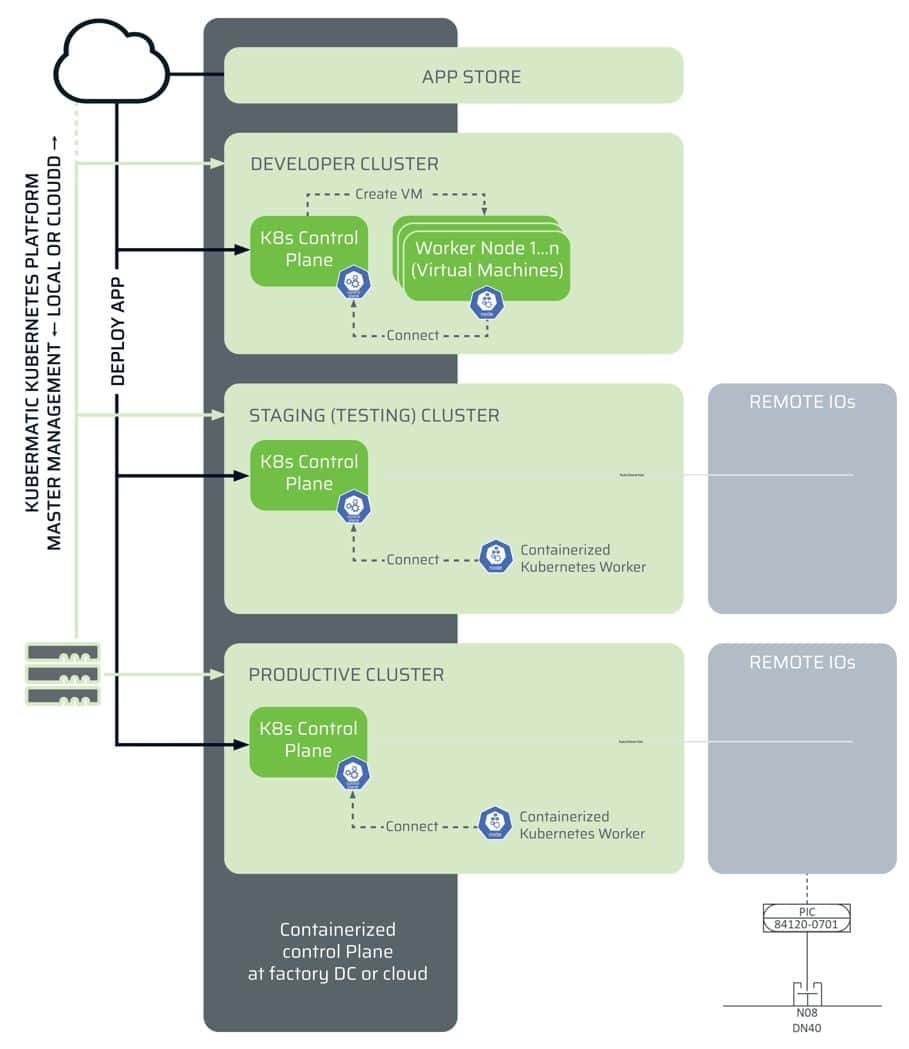
Industrial automation has long been tied to hardware, vendor-specific stacks, and rigid lifecycles. This has led to lock-in, high costs, and limited scalability. The project shows a different path. By decoupling automation workloads from dedicated devices, software-defined automation makes operations as flexible and dynamic as modern IT. The Kubernetes POC developed within the OI4 community demonstrates how a full IT/OT stack can run across development, staging, and production environments with the same agility that cloud-native applications already achieve. Concepts such as horizontal scaling, container orchestration, and remote lifecycle management move from the IT world directly into automation environments.
This matters for IT teams that can now apply proven cloud practices in production settings, for OT specialists who gain more flexible and secure control, and for production managers who can adapt resources without costly hardware replacements. Ultimately, manufacturers reduce total cost of ownership while gaining the agility to meet new requirements.
For the OI4 community, it is more than a proof of concept. It marks a turning point that shows how IT and OT can truly converge. What was once rigid and hardware-bound becomes a modern, software-driven environment that can adapt, scale, and evolve with business needs.

What we’ve
achieved
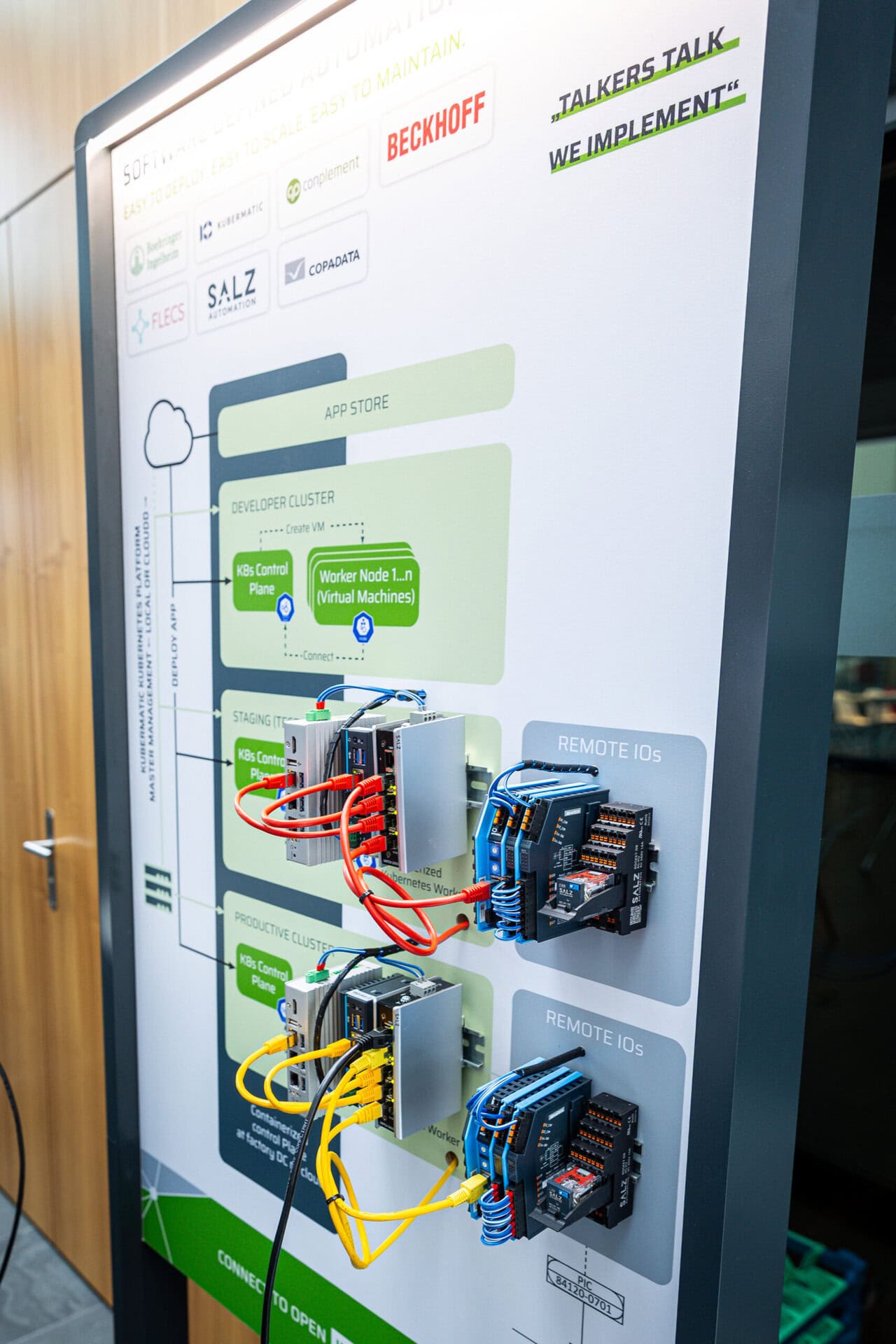
- Established a demonstrator running containerized workloads on edge nodes managed via a centralized cloud control plane.
- Enabled remote management via APIs without direct network access.
- Demonstrated failover capabilities between redundant devices.
- Integrated OPC UA-based remote I/O instead of traditional fieldbuses.
- Successfully migrated workloads from staging to production environments to validate consistency.
#Better
together
This project shows what becomes possible when IT and OT experts work side by side. Within the Open Industry 4.0 Alliance, members combined their knowledge to build a Kubernetes-based stack that runs seamlessly from development to staging to production.
The value comes from collaboration. By pooling experience from different domains, the community created a working setup that no single vendor could have achieved on its own. Together they proved that software-defined automation is not an abstract vision but a practical path forward.
BEST OF ALL: We will have a follow up project! Stay tuned.