


WHAT WE
MADE HAPPEN
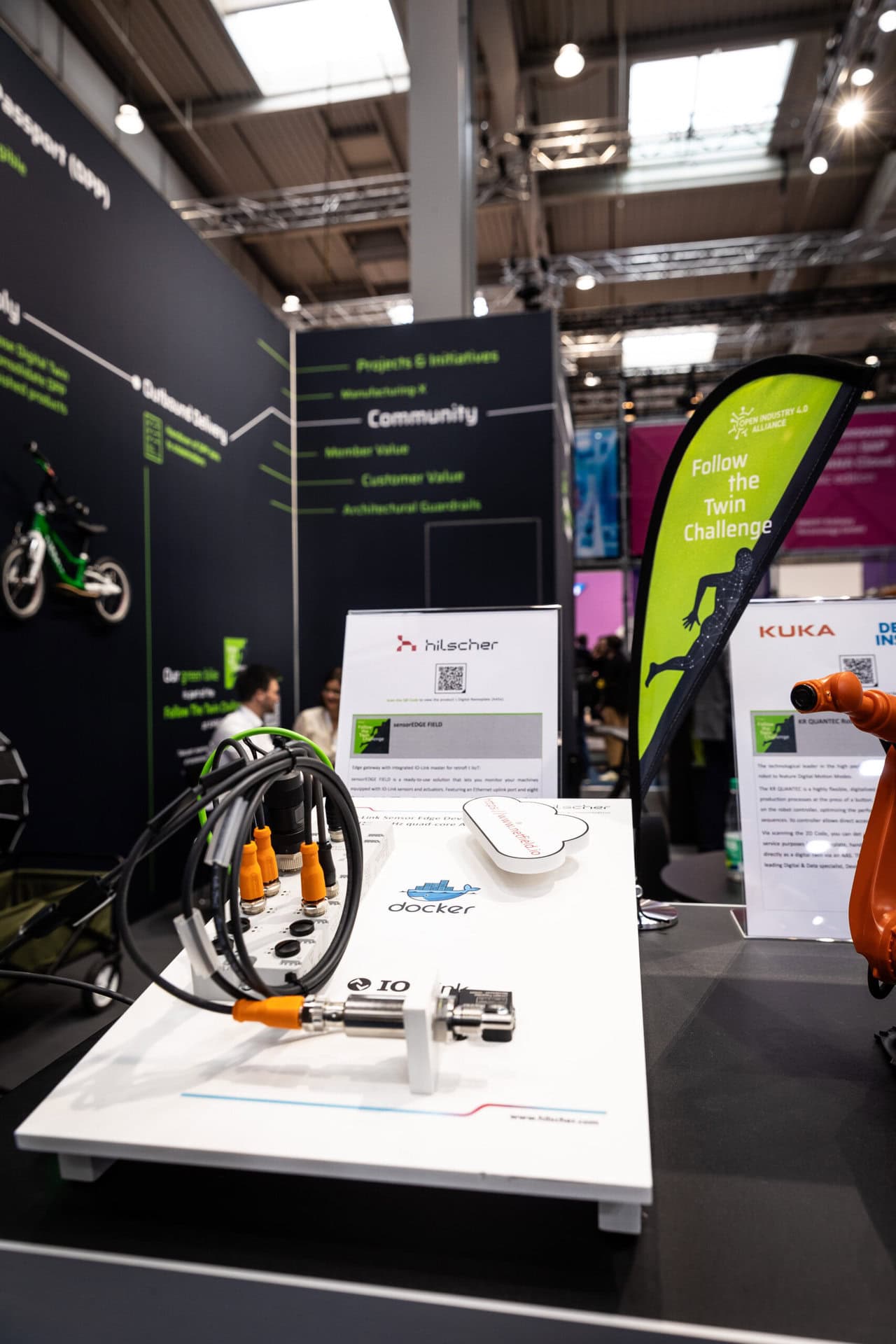
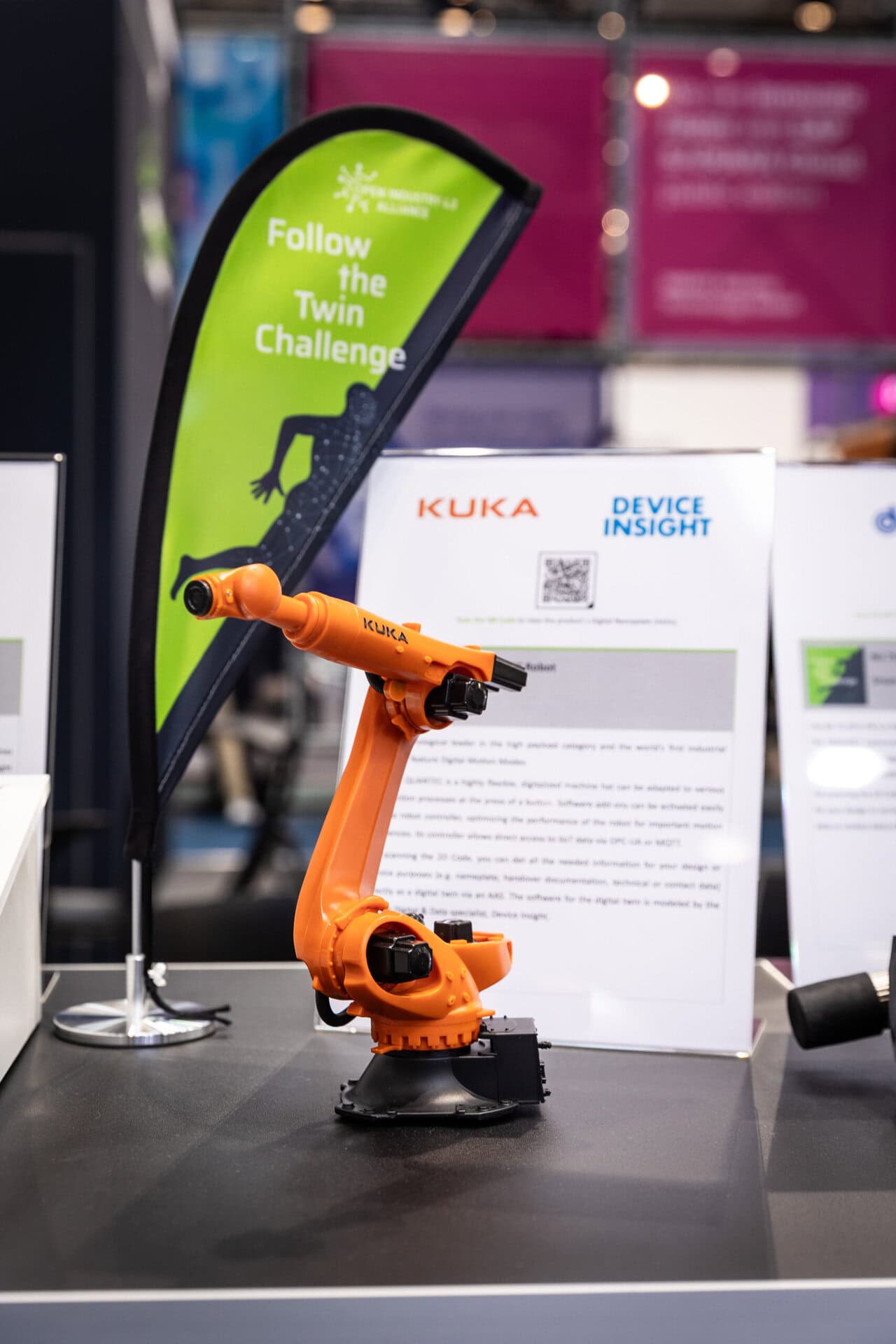
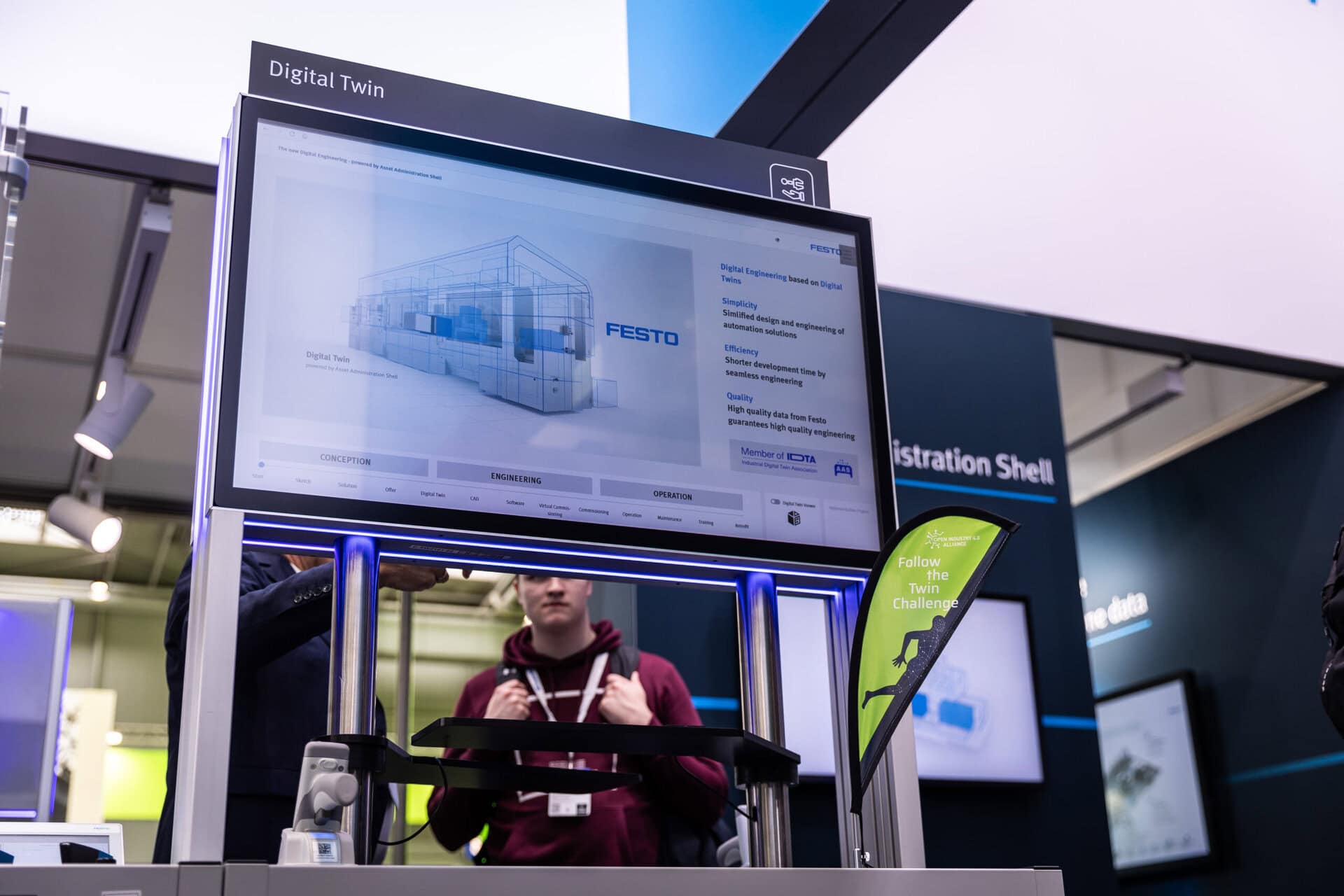
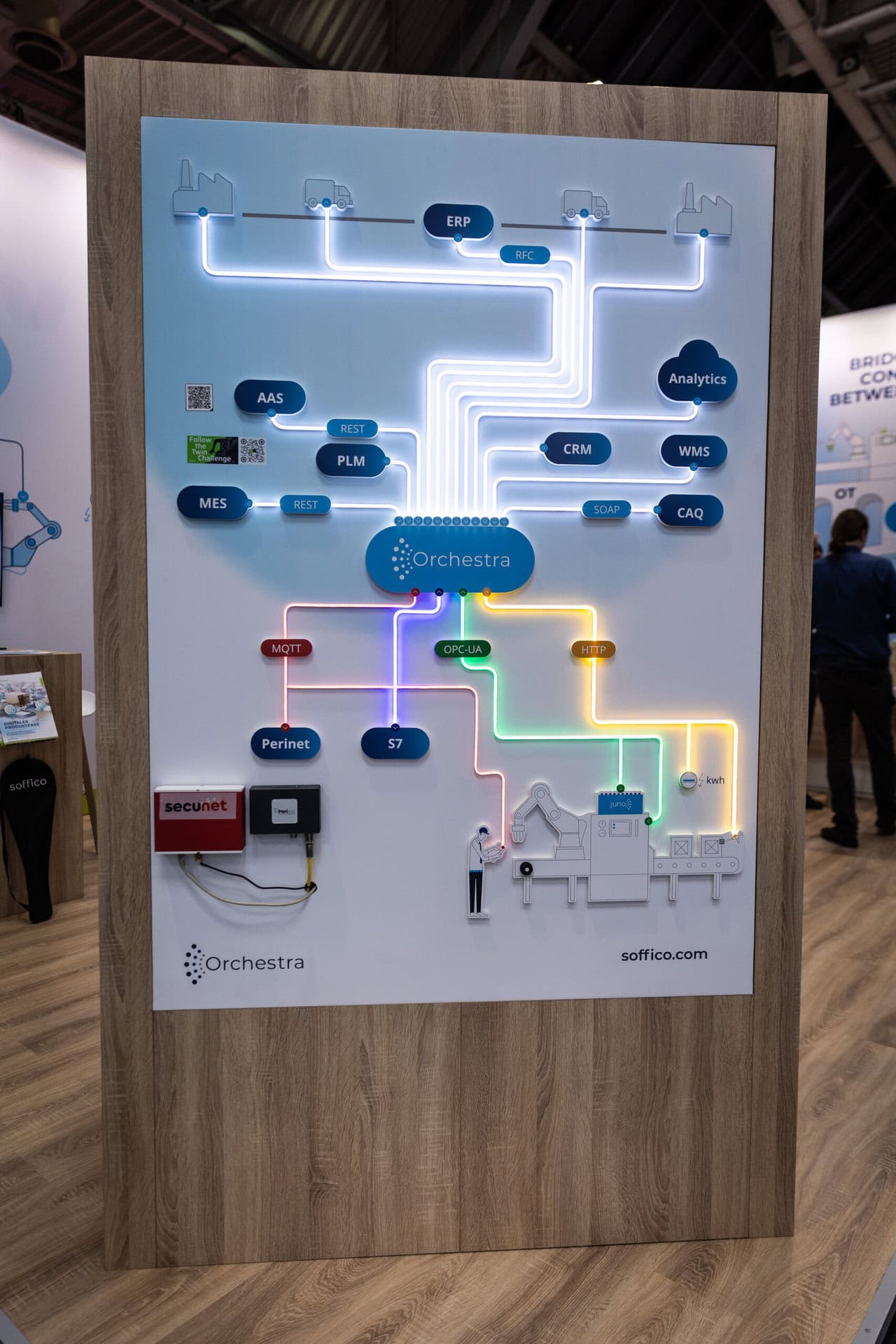
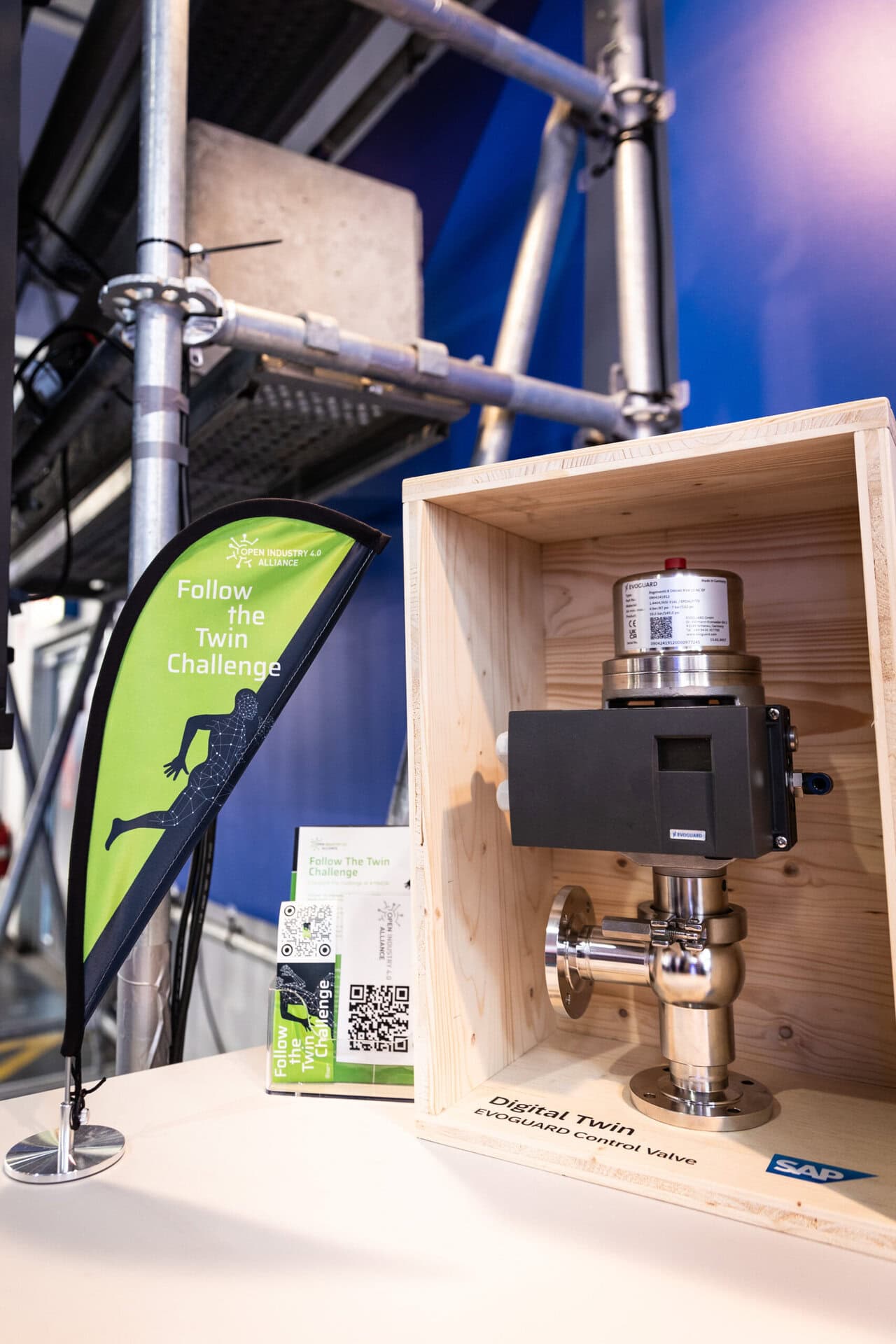
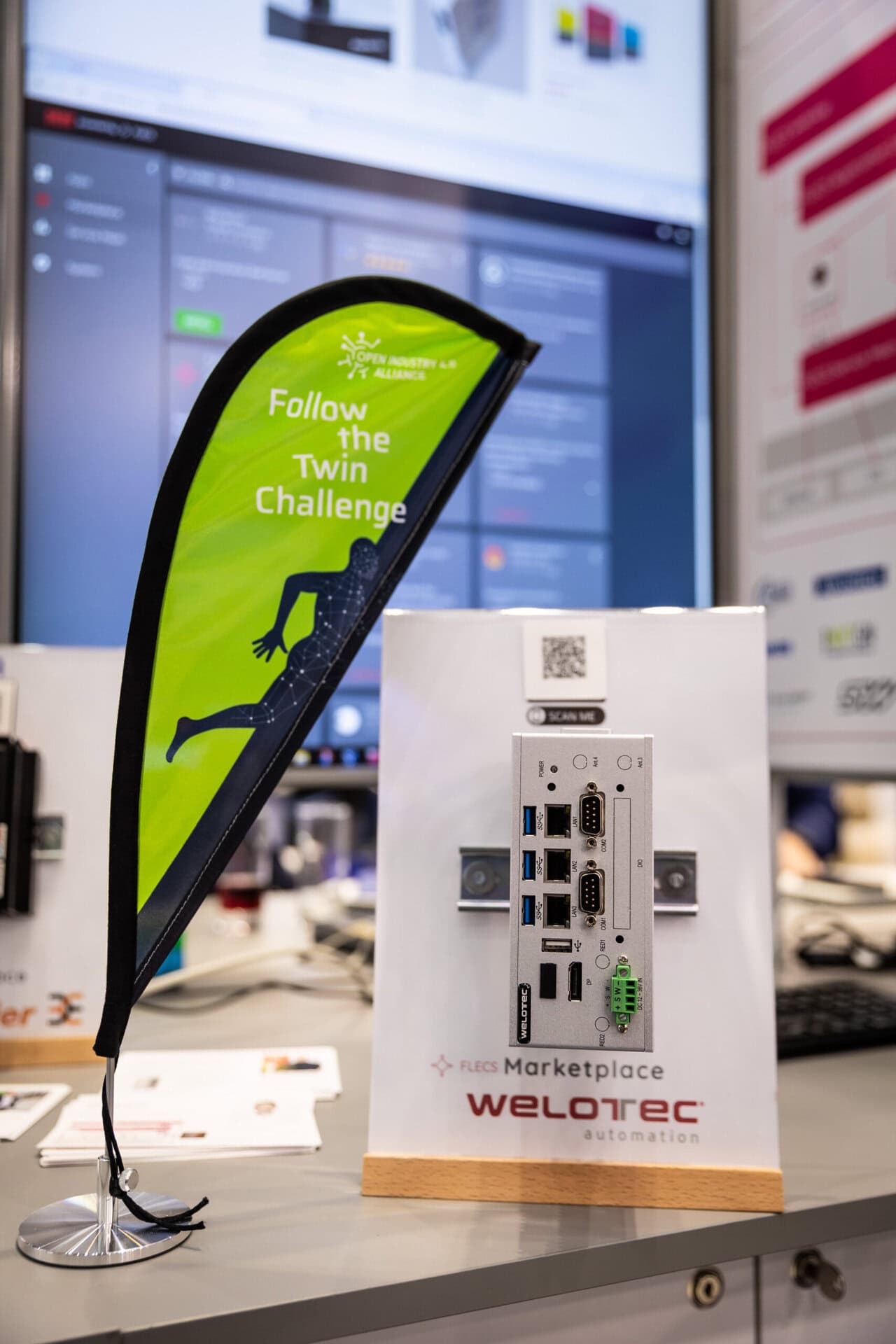
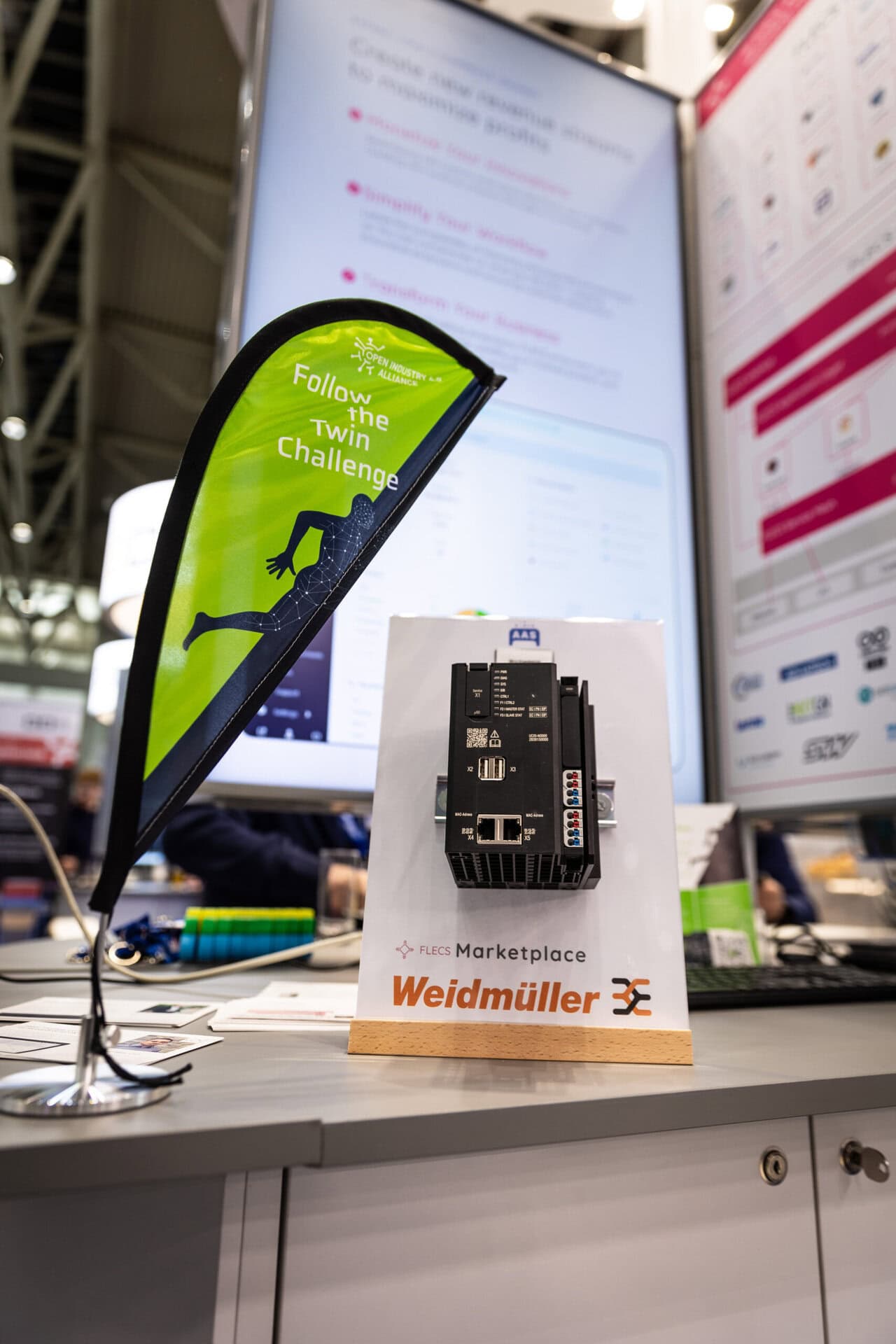
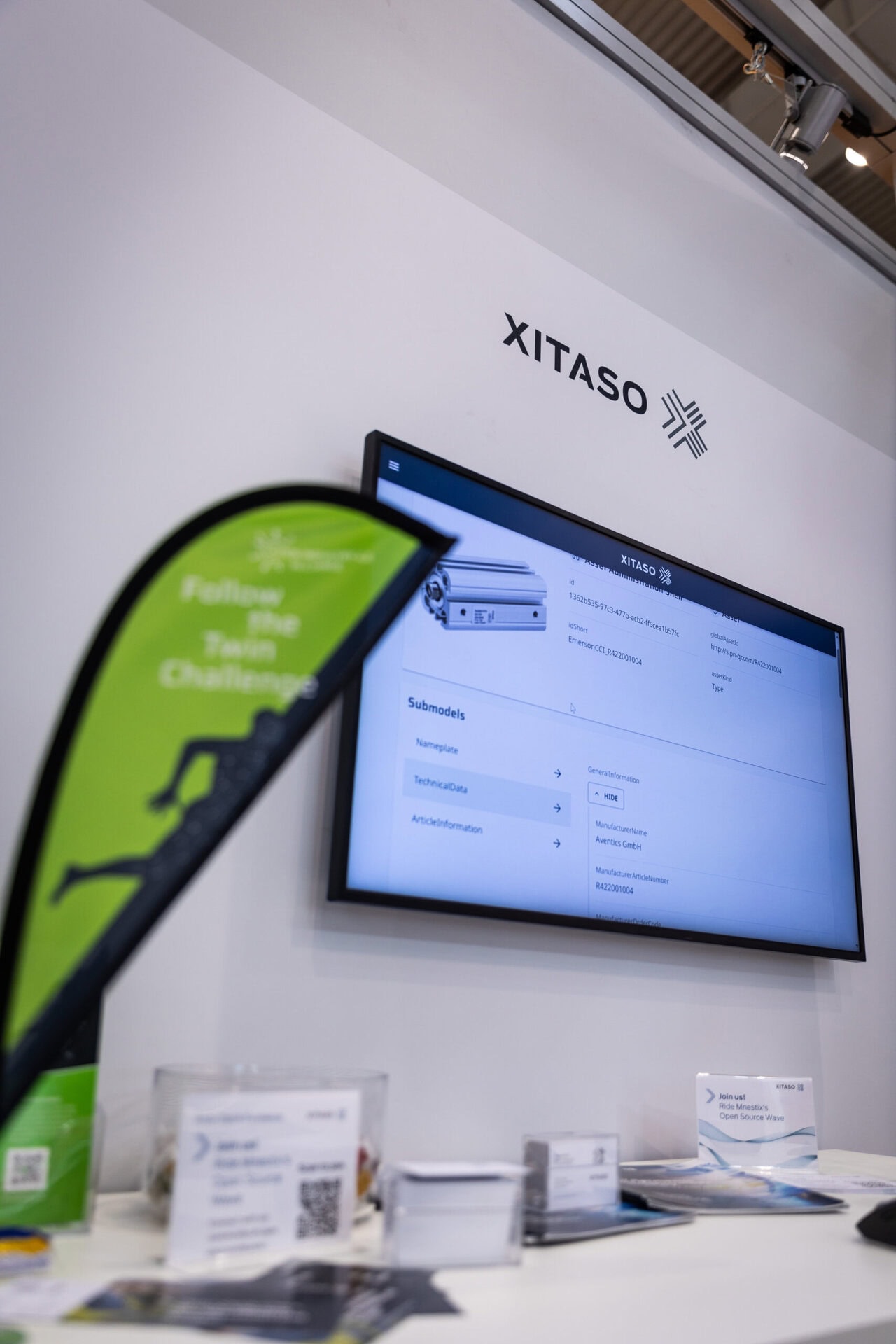
The “Follow The Twin” Challenge at Hannover Messe 2024 made interoperability of standardized digital twins tangible for all visitors. Participants experienced how product data from multiple vendors could be accessed in a standardized format across companies, live and on demand. It was the second showcase after SPS 2023, proving that digital twins can work seamlessly across two independent AAS Repositories.
- All participating partners provided product data based on the Asset Administration Shell (AAS) standard.
- Data was structured according to standardized submodels.
- Information could be retrieved consistently, regardless of vendor or backend.
- No point-to-point connection was needed between each vendor and the user.
- Standardized content meant no translation or restructuring effort for end users.

The approach of showcasing digital twins of various assets at the Messe was quite interesting. Interacting with the assets via QR code was also engaging. The user interface made it easy to understand the standards of the Asset Administration Shell for different assets.

THE CHALLENGE
WE SOLVED


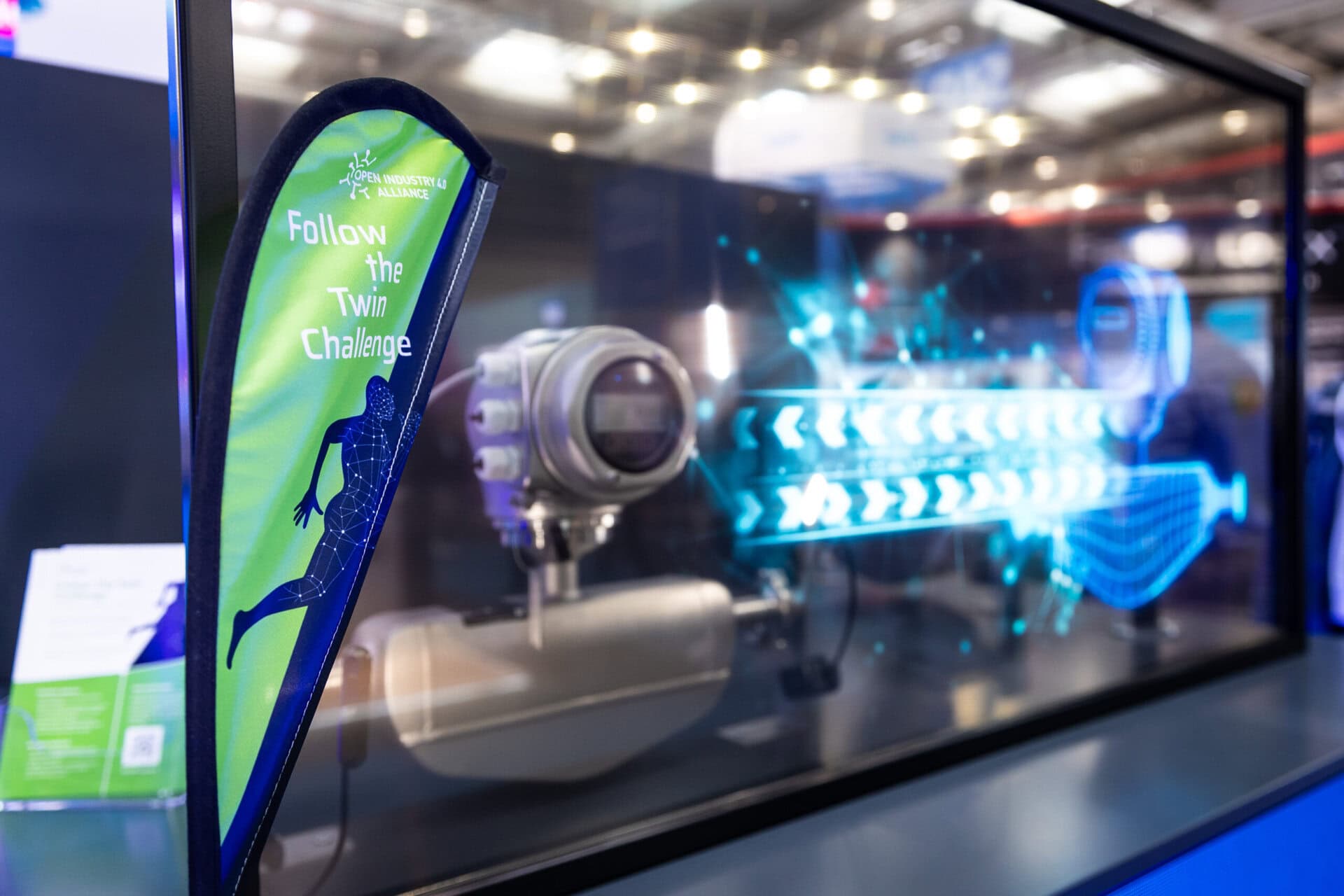


The industry remains deeply fragmented, especially when it comes to data interoperability. Each vendor typically provides data in its own way, leading to integration hurdles, manual processing, and limited automation. This challenge demonstrated how interoperability can be achieved through standardized provisioning of digital twins using AAS, regardless of the backend infrastructure or vendor involved.


PARTICIPATING
MEMBERS
AT SPS 2024








WHY THE RESULTS
MATTER (AND FOR WHOM)
Technical benefits:
- AAS implementation to serve efficient data exchange.
- No point-to-point connection is necessary for each vendor.
- Standardized information across all vendors means no additional translation or restructuring of data is needed.
Business benefits:
- Paperless provisioning of product data – available on demand to the right people when they need it.
- Vendor independent – no costly solutions needed for connecting each vendor.
- Up-to-date information.




BETTER
TOGETHER
Interoperability is only possible through shared commitment. All participants agreed to use the same standards and data models, demonstrating what’s achievable through cooperation, not competition. This challenge was another step toward a truly open and collaborative industry. Interested in contributing to the next phase? Get in touch with the Open Industry 4.0 Alliance.

INSIGHTS
AND Q&A
Why the digital twin/ AAS should be interoperable?
- Efficient Data Exchange: One of the primary purposes of ensuring interoperability between the Digital Twin and AAS is to facilitate a standardized and efficient exchange of data across different stages of production. This standard-conformant data exchange is particularly beneficial in engineering sectors, where various stakeholders like manufacturers, suppliers, and customers are involved. Through the defined AAS standard, digital twins can be exchanged efficiently among different partners, thereby enhancing the process of engineering.
- Industry 4.0 Alignment: The interoperability aligns well with the objectives of Industry 4.0, which advocates for enhanced connectivity, standardization, and data sharing among industrial assets. This interoperability is described as a pillar of the mission statement for Industry 4.0. By establishing a standardized digital representation (Digital Twin) via AAS, Industry 4.0’s goals of creating an interoperable, sustainable, and sovereign industrial ecosystem are advanced.
- Manufacturer Interoperability: The AAS is instrumental in achieving manufacturer interoperability, meaning it enables the exchange of data between assets from different manufacturers. This is a significant advantage for manufacturers, suppliers, customers, and factories, as it simplifies cooperation and promotes a standardized representation of data. The interoperability thus facilitates better coordination among different stakeholders involved in the production ecosystem .
- Support for Autonomous Systems and AI: The Asset Administration Shell not only supports the exchange of data but also lays a digital and interoperable foundation for autonomous systems and Artificial Intelligence (AI). It does this by structuring data in a way that can be standardized, found, modeled, retrieved, and forwarded, covering the entire lifecycle of products, devices, machines, and facilities. This structured data handling is essential for realizing complex solutions and continuous value chains, which are core to the functioning of autonomous systems and AI in an industrial setup
- Implementation Challenges: The scope of implementation possibilities, use cases, and complexity in the production environment can be challenging, especially for small and medium-sized enterprises (SMEs), but also for larger companies. The interoperability between the Digital Twin and AAS helps in navigating these challenges by providing a structured approach towards implementing digital twins in a norm-compliant digital production
Interoperability between the Digital Twin and Asset Administration Shell is crucial for standardizing data exchange, aligning with Industry 4.0 objectives, facilitating manufacturer interoperability, supporting autonomous systems and AI, and navigating implementation challenges in the production environment.
What is an AAS platform and what is the benefit of multi-vendor capability?
An AAS-Platform allow companies and consumers to participate in a data ecosystem in an easy and versatile manner. All information, such as needed for the digital product passport, can be provided along the lifecycle of a product.
The Digital Twin based on the AAS and provided by a standard conform Repository (such as an AAS-Platform) makes it a single source of truth for product information in cross-company business scenarios.
Industry supply chains are fragmented. Products evolve and move cross company. At some point almost all Use Cases require to move an AAS across various backends.
How does the conplement and XITASO platforms work?
Basic Capabilities (for both):
Provisioning of instance and type asset administration shells.
Interfaces for machine read and write access to the AAS, compliant with IDTA API specification for an AAS complying with V3.0 specification.
Submodels*: Digital Nameplate / Handover Documentation / Technical Data / Contact Information / Hierarchical Structure for BoM / Product Carbon Footprint
Conplement:
twinsphere – The industry grade AAS-Platform
- Highly scalable provision of 8‑digit numbers of AAS
- Multi-tenancy with secure isolation of client data
- Notification on information updates with versatile eventing
- Push mechanism to automatically publish new digital twins
- Automatic creation and publishing of VDI-2770 Document Containers with PDF‑A
- SDK for C# and Java to integrate AAS creation in your production processes
- Easy Access to all data in the Asset Administration Shells with build in AAS-Viewer
Mnestix – AAS made easy!
- Professional support available
- Pilot maturity
- Easy to setup and integrate (thanks to containerization, submodel template builder and data ingest endpoint)
- Easy to use (viewer for all AASs and submodels)
- Allows custom white labeling
- Full data ownership with on prem and in the company cloud.
- Powered by Eclipse BaSyx AAS Environment
Why is it a balancing act to transfer multivendor capabilities to end users?
The industry is and stays fragmented. There is no single central system, and this is not an issue. In the contrary, the concept of data spaces like Catena‑X or Factory‑X promotes a heterogeneous environment allowing each player to utilize own strengths and individuality thus still maintaining the capability to orchestrate and execute cross company processes. All this is based on standards like the AAS.
The Follow-the-Twin Challenge shows exactly this. It provides information about different assets in a unified and consistent manner, although not being by a central system.
The products of participating companies will be randomly hosted in one of two backends. Both solutions are based on completely different architectures and approaches – twinsphere is conplements multi-tenant SaaS Cloud Service for AAS, while the other is a dedicated “Eclipse BaSyx – AAS Environment” instance provided within Mnestix by XITASO. But despite this, the information flow is seamless to the user.
In order to be allowed for a daily jackpot the user needs to gather a minimum number of products from each backend. No worries it’s not going to be too difficult, and the app will guide you.
Individual Follow The Twin Challenge Submodel
In order to allow every participating members to showcase own digital twins additionally in their repository or product portal, we’ll provide a dedicated submodel to allow for redirection and calling of external systems. –> Just have a look on the right side of the flowchart below to see how it is embedded.
What is the used multi-vendor architecture of the challenge?
