

“too long,
didn’t read”
1
AAS gives industrial assets a shared way to describe themselves, so systems from different vendors do not need a new custom translator every time they exchange information. Instead of each manufacturer using its own structure, AAS provides a common format for identity, technical data, documentation, operating information, and other asset-related data.
2
An AAS does not make a machine intelligent, autonomous, or automatically compatible with every other system. It structures information in a way that other systems can understand. What happens with that information still depends on the software, application, or person reading it, and the usefulness of an AAS depends heavily on how consistently and completely the data has been implemented.
3
The idea behind AAS is much simpler than the terminology around it makes it sound, but putting it into practice still takes real work. Existing data has to be mapped, suitable submodels have to be selected, information has to stay current, and implementations have to prove themselves in real industrial use. This is why collaboration matters, companies can test what works, find what does not, and improve implementations together instead of solving the same problems in isolation.
AAS without
tech talk
Lucas Wolf, Technical Content Manager @Open Industry 4.0 Alliance
August 27th
ISN’T THAT CHILDISH? WHY WE DO IT.
Open any real document on the Asset Administration Shell and the wall goes up fast. Metamodel, semanticId, submodel template, IRI, IRDI, Type AAS, Instance AAS. Each term depends on three others you haven’t met yet. By paragraph two, a reader who just wanted to know what problem this actually solves has already given up.
That wall is the reason this article exists. AAS is built on an idea simple enough to explain in a minute, and the vocabulary that usually surrounds it is what keeps that idea hidden. Richard Feynman built his teaching method around one test: if you can’t explain something in plain language, either you don’t understand it well enough yet, or the explanation you’ve been giving was never as necessary as it looked. AAS is a case of the second problem.
So before touching a single acronym, here’s the whole idea, told as a story a five-year-old could follow.
“FOR 5 YEAR OLDS”
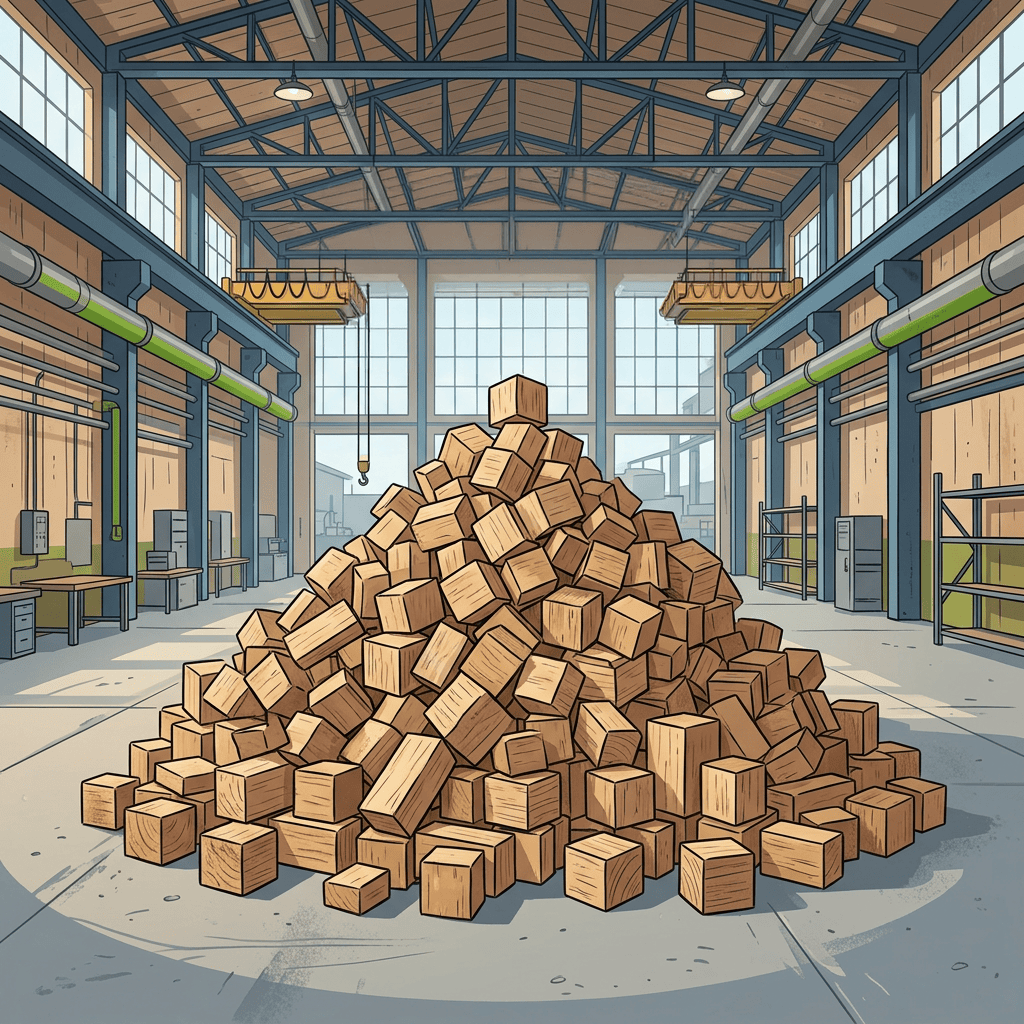
In a small workshop, four robots sat in the corner, gathering dust between shifts. Each one had been built by a different company, in a different country, for a different job. Nobody had ever asked them to work together before. One evening, someone finally did. A pile of wooden blocks sat in the middle of the floor, and a note taped to the wall said: build a tower, as tall as you can, before morning.
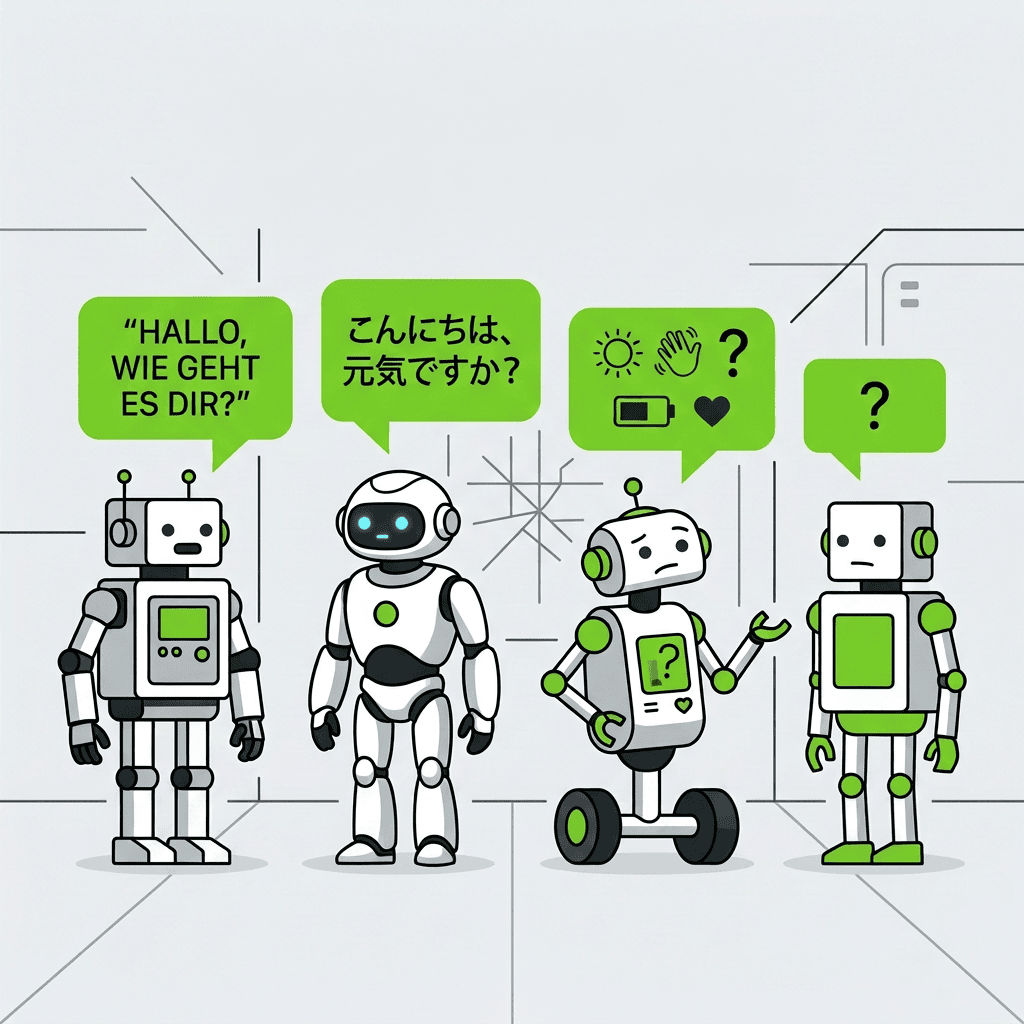
The first robot rolled forward and announced, proudly, in German: “Ich beginne mit dem größten Block.” I’ll start with the biggest block. It waited for someone to move. Nobody did.
The second robot, built halfway across the world, replied in Japanese, just as confidently: something about stacking from the corners inward. It might have been a good plan. Nobody in that room would ever know, because nobody else understood a word of it.
The third robot didn’t speak at all. It had been built to communicate only through pictures, so it projected a little diagram onto the wall, a tower, blocks numbered in order. It waited too, glancing at the others, hoping the picture would be enough.
The fourth robot was the quietest of all. It could only listen. It had been built with ears and no voice, so it sat perfectly still, absorbing everything and able to answer none of it.
An hour passed. Then two. The pile of blocks hadn’t moved. Four machines, each one perfectly capable, each one willing, sat inches apart from each other and might as well have been on four different continents. That’s the part that stings if you sit with it for a second: none of them were broken. Every one of them knew exactly what to do. They just had no way to tell each other.
Something had to give. So, quietly, each robot was fitted with something new, a small AAS sitting inside it, no bigger arm, no new sensor, just information, written in one format none of them had ever used before, and, it turned out, all of them could read.
None of the robots spoke a different language now. They didn’t need to. Whatever one robot’s AAS held, the others could read directly, no translation, no guessing, no waiting for someone else to explain it.
For the first time all night, four machines that had never understood a single word from each other understood everything they needed to. Nobody had learned a new language. They had simply stopped needing one.
By the time the sun came up, the tower stood taller than any of them. The robots never learned each other’s languages, not one word of it. They had simply been given a way to describe themselves that didn’t depend on language at all.
WHAT THE AAS ACTUALLY IS.
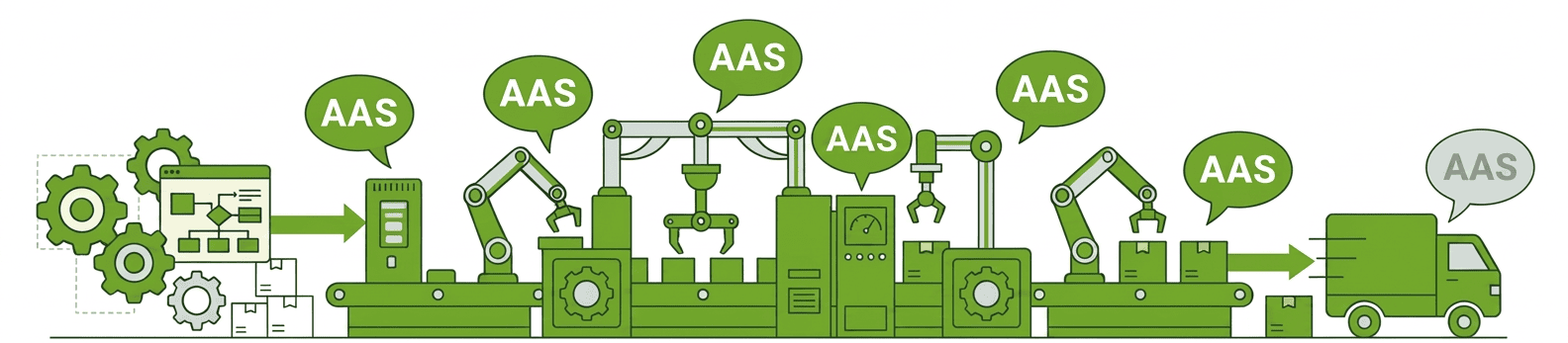
That workshop scene is the same problem sitting inside most real factories today, just quieter and less visible. A motor from one manufacturer, a control system from another, a maintenance tool from a third, each one built to describe itself in its own proprietary format. Where these systems do manage to talk to each other, it’s usually because two engineers sat down and built a one-off connection between exactly those two systems, and only those two. Add a fifth machine from a new supplier and that custom connection has to be built all over again, from scratch, for that one pairing.
An asset is any real thing, a robot, a motor, a sensor, a whole machine. The Asset Administration Shell, AAS for short, is the structured, computer-readable version of that thing, a defined set of fields and data structures that any system can read, regardless of who wrote them. It serves as the practical implementation of an Industrial Digital Twin for Industry 4.0. Instead of every company building its own incompatible, proprietary format and negotiating a custom bridge for every new pairing, AAS offers one shared structure that machines, systems, and partners can read the same way, no matter who built them or where they came from.
In practice, an AAS is a file, or a live service, built around a metamodel defined by the IDTA, the Industrial Digital Twin Association. It carries information about a physical asset: its identity, its technical properties, its documentation, sometimes live data like temperature or runtime hours. That information sits inside standardized structures called submodels, one for basic identification, another for technical data, another for documentation, and so on, each one covering a different slice of what there is to know about the asset. A digital nameplate, the kind that lists manufacturer and serial number, is only one of those submodels, a small and fairly simple one at that. The real weight of an AAS sits in everything else around it: the technical data, the operating history, the documentation, the parts that actually get used once the basic identity of the machine is no longer the question.
That’s the whole mechanism. An AAS holds information. It doesn’t act on it. It’s not artificial intelligence, it doesn’t make decisions, and it doesn’t automatically make two machines compatible just because they both have one, any decision or action still has to come from whatever system is reading the data. An AAS only removes one specific problem: the need to build a custom translator every time two systems from different vendors need to exchange information about the same kind of thing. If a manufacturer never fills in the right fields, or fills them in inconsistently, the AAS is just an empty shell with a nice name. The standard gives everyone the same shape to work with. It doesn’t guarantee anyone actually uses it well.
That’s also why adoption has been slower than the pitch decks suggest. Building a proper AAS for an existing product line takes real engineering work, someone has to map old data formats onto the new structure, decide which submodels actually apply, and keep that information updated as the product changes. Plenty of companies are still figuring out where that effort pays off first, and where it’s still cheaper to just keep the old, one-off connections running a little longer.
None of that makes the idea any less useful where it’s actually applied properly. It just means AAS is a tool for a specific, narrow problem, getting different systems to describe things the same way, not a solution to every integration headache a factory has. Worth understanding clearly, worth building well where it matters, and worth being honest about everywhere else.
MAKE SENSE BUT DUNNO WHERE TO START?
Standing at the edge of all this, wondering where to even start, is not a sign you’re behind. It’s the normal reaction to a big, half-finished standard with a hundred open questions and no obvious first step. Nobody figures this out alone, and nobody is supposed to.
The web didn’t get built alone either. In the early days of HTML, it was a rough sketch, full of gaps, held together by a handful of people who kept poking at it, breaking things, comparing notes, and slowly turning a shaky idea into something the rest of the world could just use without thinking about it. Nobody remembers their names today, but everyone benefits from the years they spent figuring it out together.
AAS is at that same stage right now. The Open Industry 4.0 Alliance, OI4, is where that figuring-out is actually happening. Members build real implementations of AAS submodels, try them out, break them, fix them, and feed back what they learn, so the standard gets a little more solid every time. If the whole topic feels too big to take on by yourself, that’s exactly the point. Come find the people already in the middle of it, and learn it together instead of alone.